
Lighting an aircraft hangar requires more than simply installing fixtures with sufficient output. Hangars are large, open environments with high ceilings, complex layouts, and demanding operational requirements. Lighting systems must provide consistent illumination across wide floor areas while also supporting vertical visibility around aircraft structures, equipment, and maintenance zones.
A well-designed hangar lighting system improves safety, enhances productivity, and reduces long-term operating costs. This guide explains how hangar lighting is designed, what types of lighting are used, and how different systems work together to support aviation operations.
Aircraft hangars differ significantly from standard commercial or industrial spaces. Ceiling heights are typically much higher, aircraft surfaces can create reflective glare, and maintenance tasks often require detailed visibility across large areas.
Lighting systems must account for:
These factors make it important to use lighting systems specifically suited for aviation environments rather than general-purpose lighting solutions.
High bay lighting is the primary lighting system used in most aircraft hangars. These fixtures are designed for installation at higher mounting heights and provide broad, consistent illumination across large interior spaces.
A properly designed High Bay Lighting for Aircraft Hangars system helps:
Fixture selection should be based on mounting height, beam distribution, and layout rather than wattage alone.
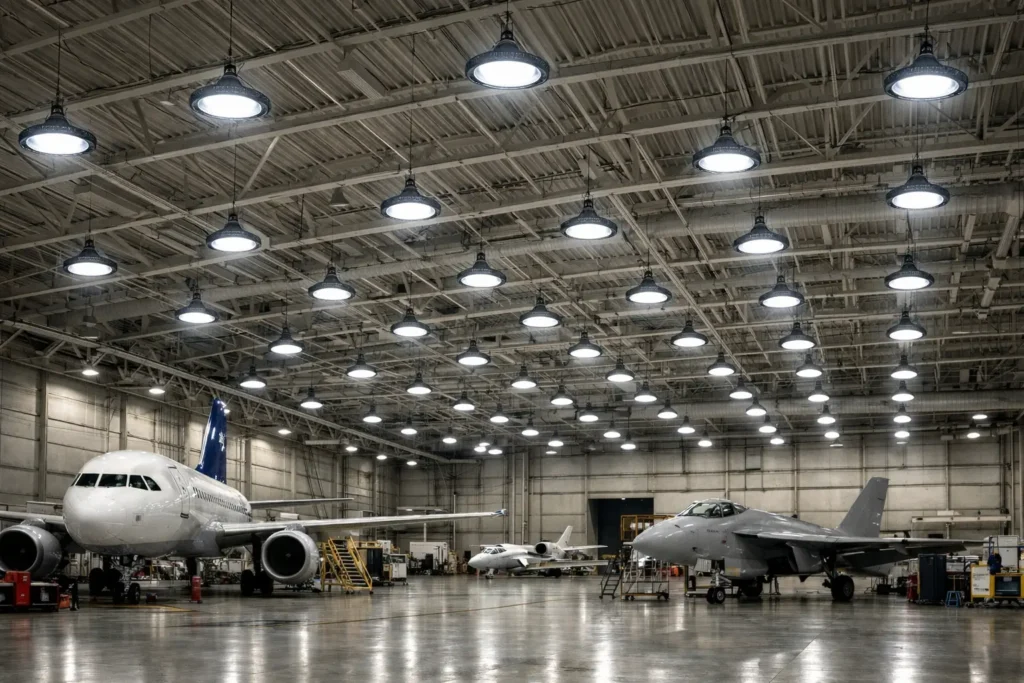
One of the most common challenges in hangar lighting is uneven illumination. Poorly placed fixtures can create shadows around aircraft wings, fuselages, and tail sections, making it difficult to perform inspections or maintenance work safely.
Effective hangar lighting design focuses on:
Balanced lighting improves both safety and operational efficiency while reducing eye strain for personnel working in the space.
In addition to interior lighting, many hangars require exterior lighting systems to support operations outside the building. Flood Lighting for Aircraft Hangars, Aprons, and Airport Facilities is commonly used to illuminate:
Flood lighting provides wide-area coverage and helps maintain visibility for aircraft movement, ground support operations, and nighttime activity.
Some hangars and aviation facilities include areas where standard lighting systems are not suitable. These environments may involve fuel vapors, chemicals, or specialized operational conditions.
In these cases, facilities may require:
These systems are designed to operate safely and reliably under specific environmental conditions.
Effective hangar lighting is not based on a single fixture type. Instead, it involves a combination of lighting systems that work together to support all aspects of the facility.
A complete hangar lighting strategy may include:
By combining these systems, facilities can ensure consistent visibility, improved safety, and efficient operations across all areas.
When planning a hangar lighting system, several factors should be evaluated to ensure optimal performance:
A well-planned system delivers better results than simply increasing fixture output or quantity.
Lighting plays a critical role in the safety, efficiency, and functionality of aircraft hangars. The right combination of high bay, flood, and specialized lighting systems ensures that facilities can operate effectively while supporting maintenance, inspection, and daily operations.
For aviation lighting systems designed specifically for hangars and airport facilities, visit HangarLights.com. For a broader range of commercial and industrial LED lighting solutions, explore IndustrialLightingFixtures.org.and HangarLights.com